With Free RPG Day just around the corner, it's the perfect time to look back at the roots of our favorite tabletop experiences. Tabletop roleplaying games are the granddaddies of the modern FLGS (Friendly Local Game Store). They birthed a culture of storytelling, dice rolling, and socialization that we still celebrate every day at the shop. But the influence of classic roleplaying goes much further than campaign books and character sheets.
If you trace the lineage of the world's most successful collectible card game, you'll find it leads right back to a group of friends waiting for their Dungeon Master to finish setting up a map.
The legend you may have heard is actually true! Magic: The Gathering was born out of the absolute necessity for something quick, portable, and engaging to play during the downtime between tabletop roleplaying sessions and convention events.
The RoboRally Rejection
Our story begins in the primordial mists of 1991. Cue a Wayne's World style diddly-do-diddly-do transition scene here.
Richard Garfield, a mathematics doctoral student at the University of Pennsylvania, had a meeting with Peter Adkison. Adkison was the CEO of a brand-new, incredibly small gaming company called Wizards of the Coast. Garfield wanted to pitch a board game he had designed called RoboRally.
Adkison loved the concept of RoboRally, but WotC simply didn't have the capital or the manufacturing capability at the time to produce a board game with lots of plastic pieces and heavy cardboard. Instead, Adkison gave Garfield a very specific creative challenge. A quest, if you will.
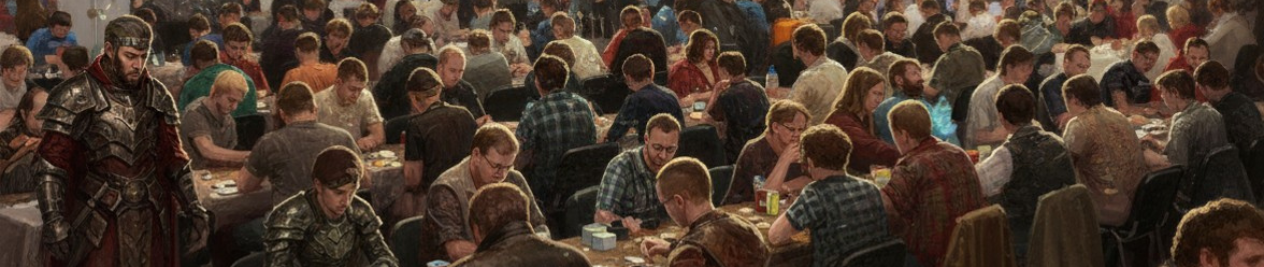
He asked Garfield to create a game that was cheap to produce, highly portable, and fast enough to play in the gaps of a gaming convention. For readers who haven't attended one, players at these massive events frequently found themselves with an hour to kill between Dungeons & Dragons modules or long wargaming sessions. They needed a game that could fit in a pocket and be played on a small table or even the floor.
Five Magics and The Penn Playtesters
Garfield phased out RoboRally, went back to the drawing board, and dusted off an old prototype he had tinkered with in the '80s called Five Magics. He refined the concept into a card game where each player built their own deck before the game even started. Does this game mechanic sound familiar?
Hint: Brrr! Anyone else feel a...draft?
Back to the story, it's not hard to find. Garfield's not just of the body, but of the mind. He brought the Five Magics prototype (then tentatively titled Mana Clash) to his playtest group at the University of Pennsylvania. This group included future legendary game designers like Skaff Elias. Because this group was heavily invested in classic roleplaying games, the fantasy aesthetic was an easy and natural fit.
The DNA of early D&D is baked right into the original 1993 Alpha release of Magic. The spells players were casting (Fireball, Lightning Bolt, Animate Dead) and the creatures they were summoning (Goblins, Lord of the Pit, Earth Elementals) were pulled straight from the cultural lexicon of classic fantasy roleplaying. You weren't just playing a card game like grandma at Bridge night. You were acting as a Planeswalker, a powerful wizard dueling another wizard, simulating the feeling of a high-level magic encounter without needing a Dungeon Master to run the math or requiring a pizza in tribute.
The Prototype vs. The Phenomenon
The jump from concept to reality saw a few major shifts before it hit the tables:
-
Working Title: The game transitioned from the prototype name Mana Clash to the final Magic: The Gathering.
-
Core Concept: Originally, players were going to draft from a single communal deck. This was changed to the current system of building individual, customizable decks from a personal collection.
-
Game Length: The original goal was a 15 to 45-minute game, but the final product was fast enough to play while eating lunch in the halls of Gen Con.
-
Art Direction: The initial black and white OSR-style sketches were replaced with full-color fantasy illustrations from a bevy of artists.
The Gen Con Explosion and Scrye Magazine
Wizards of the Coast debuted Magic: The Gathering at the Origins Game Fair and Gen Con in the summer of 1993. They brought what they assumed was a six-month supply of cards. It was meant to be a fun little side game for convention-goers.
The entire inventory sold out in a matter of days.
People were buying booster packs, opening them in the halls, and immediately sitting down on the carpet to play. The concept of trading cards to build a better deck caught fire instantly. It was no longer just a filler game for RPG players. It became the main event.
As the game exploded in 1994, the surrounding culture had to catch up. This is when classic publications like Scrye magazine stepped into the spotlight. Before the internet offered instantaneous price checks and decklists, magazines like Scrye and InQuest were the absolute bibles of the hobby. Scrye launched in the summer of 1994 and provided the first reliable price guide for the wildly fluctuating secondary market (some things never change, amirite?). It validated the "collectible" half of the collectible card game.
Players would flip through the glossy pages to see rumors of upcoming sets, read strategy articles, and check the value of their Moxen (moxes?) and Black Lotuses. These magazines bridged the gap between the tabletop and the broader gaming community, turning local playgroups into a global phenomenon.
Returning to the Roots
Today, Magic has its own massive, sprawling lore spanning dozens of planes and decades of storytelling. It has digital clients, professional tours, and universal crossover sets. But at its heart, the game is still fulfilling the exact quest Peter Adkison gave to Richard Garfield back in 1991.
It's the perfect game to pull out when your adventuring party is taking a break. Sling some spells at this Saturday's Free RPG Day by way of rulebook or through your cards. Our Event Page has plenty of opportunities for you, and if you are ready to upgrade your grimoire, read about how you can trade in your old magic for cool, new cantrips.
📬 Join the POP! Shop Community
Want to stay ahead of the game? Sign up for our newsletter to get updates on new products before they hit shelves, early access to collections, invitations to special events, and exclusive discounts!